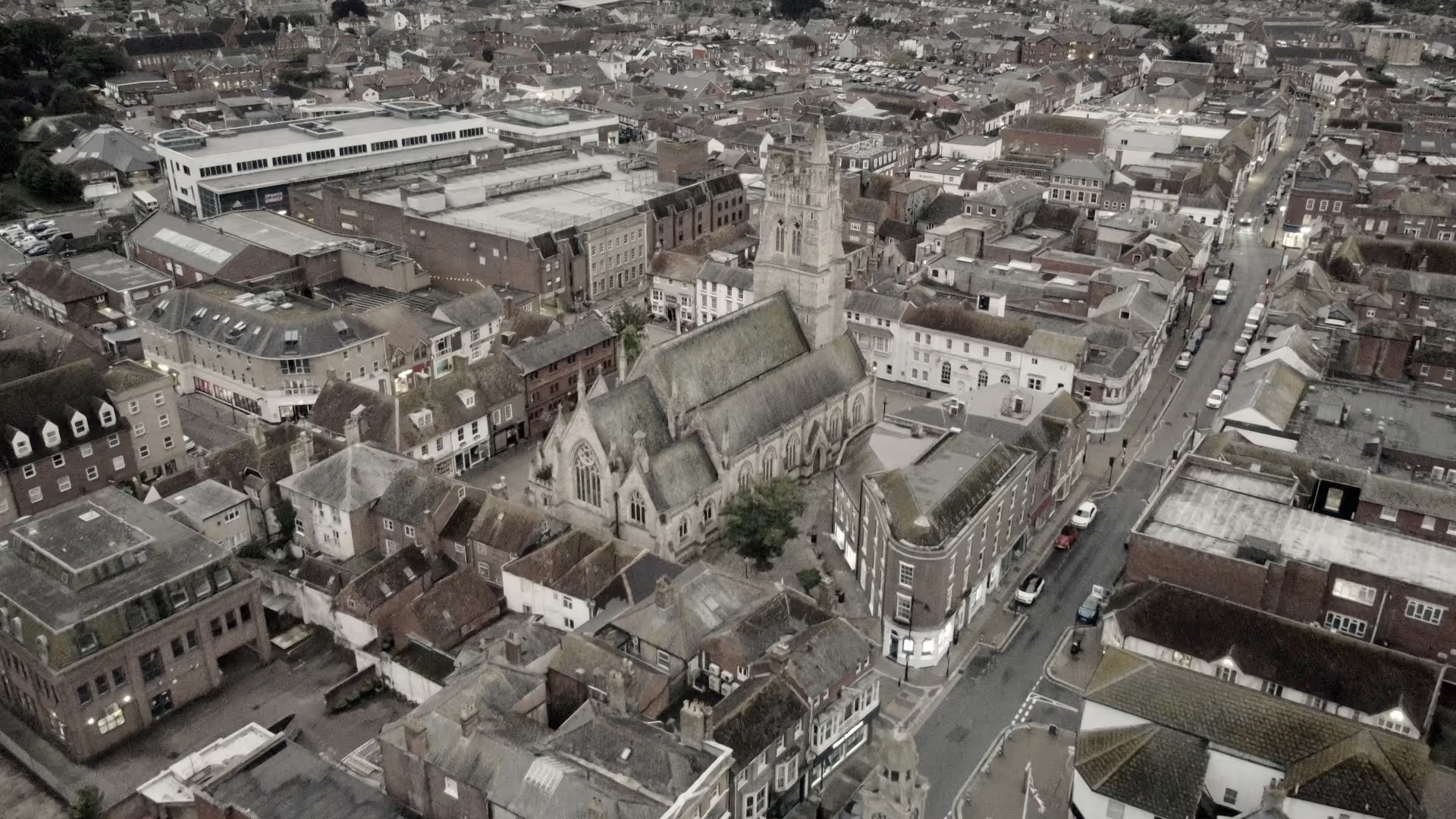
The burying of the dead within churchyards or areas associated with a church date back to the 7th century. This happened when the church gained control over burials & required them to be carried out in consecrated ground, & so it became standard practice to bury the dead in churchyards. The nave of St Mary’s dates from 1070, & at that time & before, the dead would have been buried in simple graves with limited memorials or grave markers many made of wood, lost over time or removed to allow new burials.
In the Middle Ages, only saints, clergy & nobility were buried within the church itself, & examples can be seen within St Mary’s, everyone else would be buried outside. This practice stopped by the 19th century, when it became considered unsanitary. The use of formal markers, in the churchyard, became more common around the 17th century, effectively creating the churchyard we know today.
The problem now was obtaining the stone & a mason to carve it. Memorial masonry tended to be a part time occupation & the standard of work & styles varied from place to place. Unlike many of today’s grave markers, there is a distinct lack of crosses within older Churchyards mainly due to the cross being strongly associated with Catholicism & not the Church of England. But, overtime particularly into the Victorian era, there was an abundance of styles, shapes & sizes of memorials marking graves.
The photographs show St. Mary’s Churchyard & the abundance of markers (no crosses).
An interesting sided note is that, grave markers tend to face towards the east as that is thought to be where the call to resurrection will come, however the priests of the parish’s markers will face west, so as, in death they can still administer to their flock.

